
Arpi on Tile
Resilience and Expression
: Despite global market fluctuations and geopolitical uncertainty, Cersaie 2025 remained a cornerstone event.
Italgraniti presented its new exhibition space, Italgraniti Going Mega, designed by architects and art directors Andrea Parisio and Giuseppe Pezzano. The large slabs defined the volumes of the stand and guided visitors through an immersive path.(Image courtesy of Italgraniti).
By Arpi Nalbandian Tileometry
For five days, Bologna once again became a creative epicenter where manufacturers, designers, and architects converged to explore the evolving language of materiality at Cersaie 2025.
The 42nd edition, held Sept. 22-26 within Bologna Exhibition Centre’s 16 halls, hosted 627 exhibitors – with 343 tile manufacturers, and 186 showcasubng innovations spanning installation systems, surface technologies, and complementary design solutions.
Notably, 243 exhibitors (39%) hailed from 29 countries, underscoring Cersaie’s enduring international scope.
According to the show’s organizers, attendance reached 94,577 visitors, with a 3% increase in Italian professionals (49,671) offsetting a modest 4.6% decline in international attendance (44,906), attributed largely to transportation strikes on two of the show days.
“Cersaie’s enduring appeal enabled exhibitors to maximize their investments,” said Augusto Ciarrocchi, Chairman of Confindustria Ceramica. “Our companies were particularly impressed by the quality of the distributors, architects, installers, and real estate professionals they met in Bologna.
“The Italian ceramic industry remains the world leader thanks to its investments, the quality of its design and innovation, and its unflagging commitment to environmental and social sustainability. Nonetheless, we face constant challenges.”
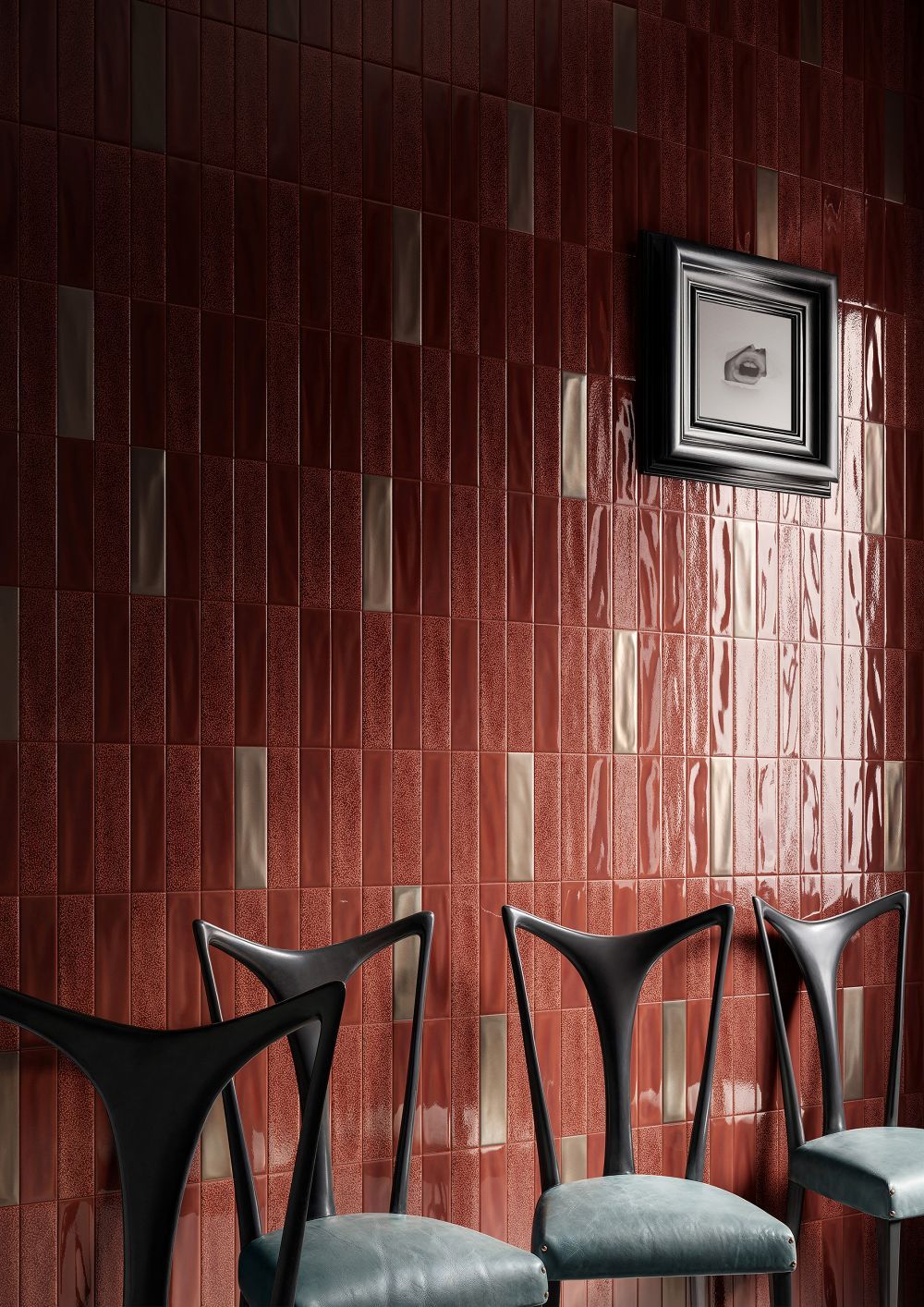
The Porto Rotondo collection from Cerasarda, inspired by Sardinian nature, provides a refined palette with finishes that create surfaces reflective of the sea, local landscapes, Mediterranean shrubs, and more with versatile formats, 3D effects, and intriguing textures .(Image courtesy Cerasarda)
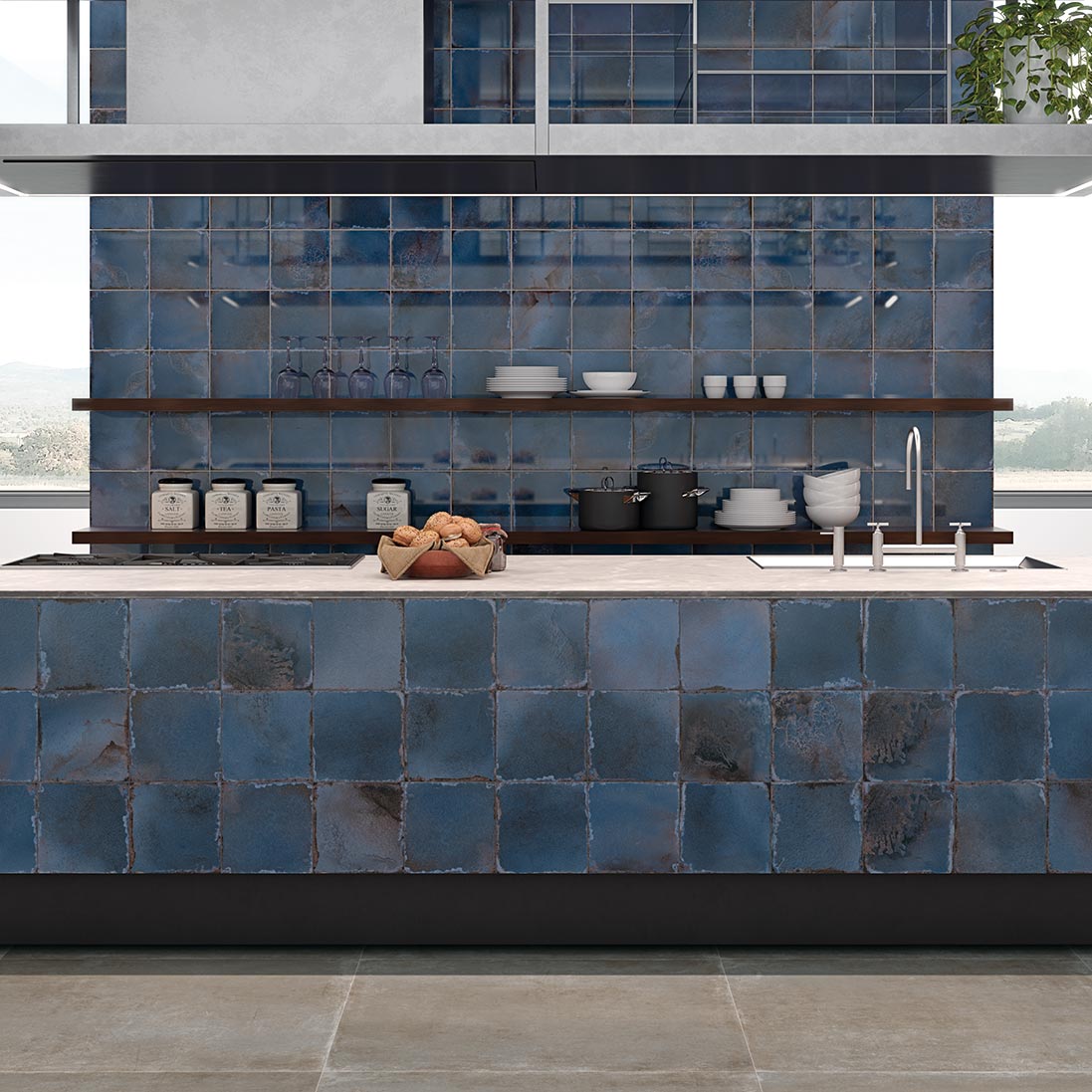
“Small size, maximum material expression,” stresses tile manufacturer Vives Ceramica. Under the concept Small Ceramic Tiles - Made in VIVES, this selection of small format tiles (8x31.5, 13x13, 15x15, 10x20, and 20x20 cm) offers new compositional possibilities for projects that demand precision, detail, and authenticity. Shown here is Luca in Marino. (Image courtesy Vives Ceramica)
Realistic, Dimensional Surfaces
Boundaries between nature and digital innovation continue to blur. The integration of advanced multi-stage digital printing, structured glazing techniques, and integrated lighting simulation, achieves achieving extraordinary depth, sheen variation, and tactile precision.
The resulting surfaces feel both authentic and elevated beyond their natural inspirations. With this heightened realism, ceramic tile continues to its momentum towards architectural authenticity, both aesthetically and spatially.
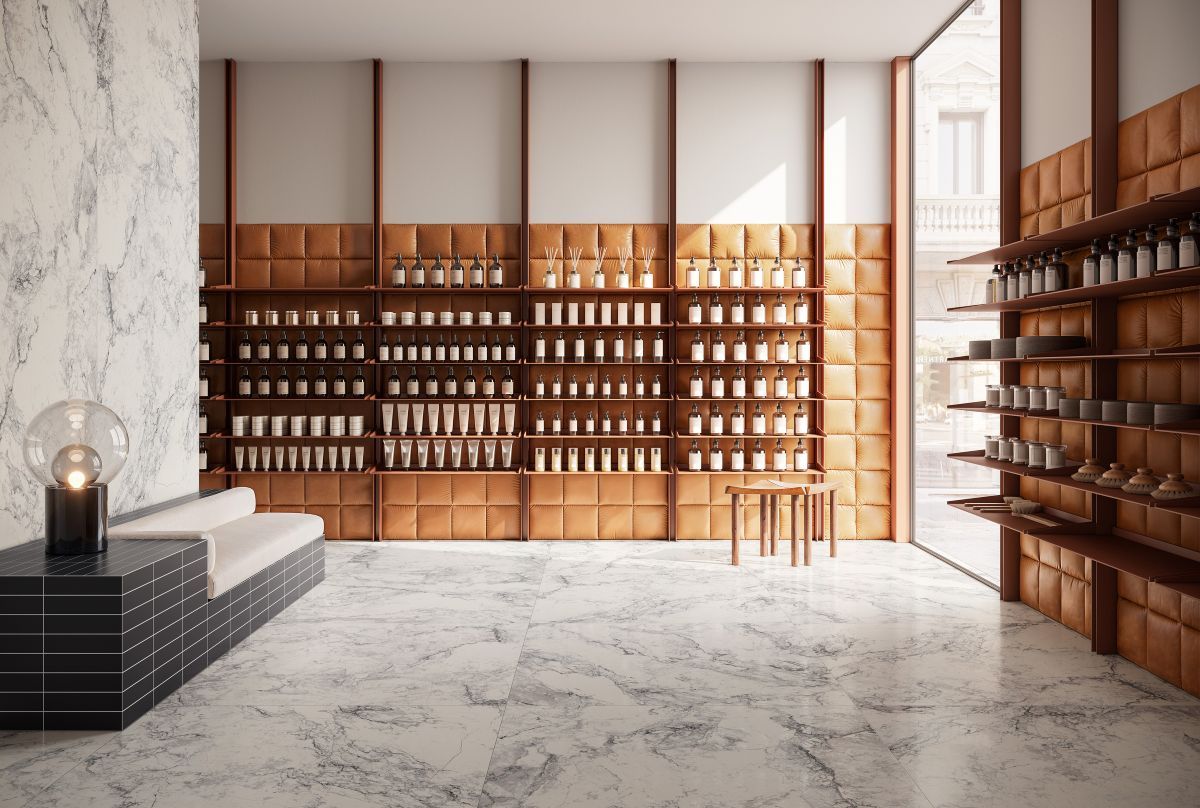
With Serenissima’s Palazzo collection, the textures, and colors of marble strike with architectural realism. The porcelain tiles interpret eight famous marble varieties celebrated for their beauty and versatility. ((Image courtesy Serenissima Ceramiche)
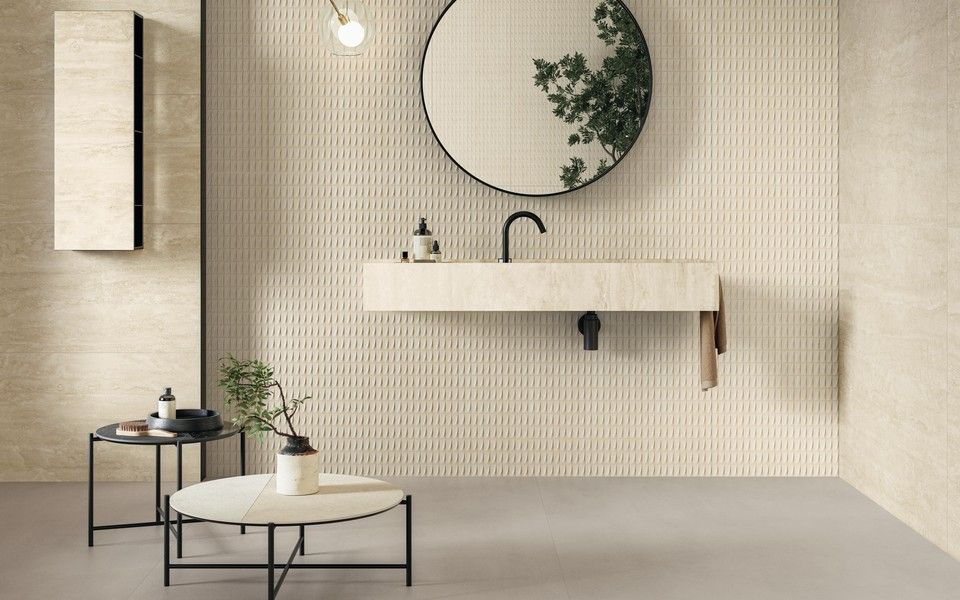
Marvel T is the result of in-depth research into travertine, offering a contemporary and textured interpretation that remains faithful to the elegance and visual impact of natural stone. The three-dimensional surfaces, designed by HBA, amplify texture and character, creating a continuous dialogue between texture and light. ((Image courtesy Atlas Concorde)
Sustainability as a Design Principle
For architects, sustainability is no longer a technical specification – it’s a design narrative. Tile manufacturers producing thin-gauged porcelain slabs, as slim as 6mm, significantly reduce embodied carbon through lighter transport and reduced raw material use.
Production advancements include digital optimization, closed-loop water systems, and modular manufacturing that allows tiles to adapt across interior, exterior, and urban applications. This systemic approach aligns with circular design values, turning tile into a tool for responsible architecture without compromising beauty or longevity.
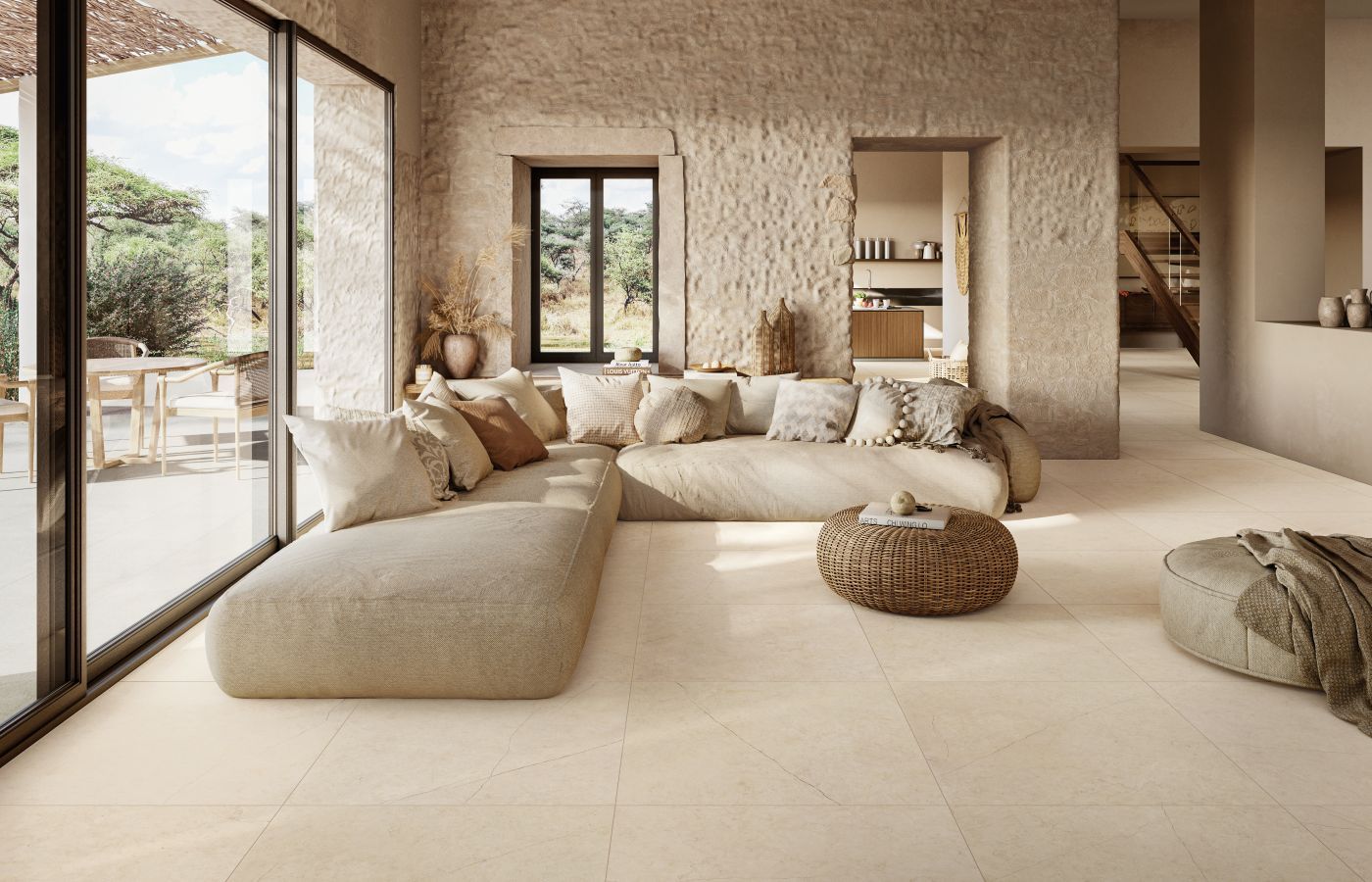
Inspired by Sicily’s native stones, ReGea from Mirage embodies the principles of circular economy. Integrating raw and fired ceramic scraps sourced not only from Mirage’s own plants, ReGea also incorporates post-consumer recycled glass from decommissioned photovoltaic panels. ((Image courtesy Mirage)
The Tactility of Neutrals
Neutral tones—long a mainstay of modern architecture—are being reinterpreted with surface-driven complexity. Shades of cream, oatmeal, and sand are layered with delicate glazes, soft grain textures, and nuanced matte finishes that heighten the sensory experience.
These “quiet” palettes cultivate emotional resonance in both residential and commercial environments, proving that restraint, when articulated through material texture, can convey warmth and human connection.
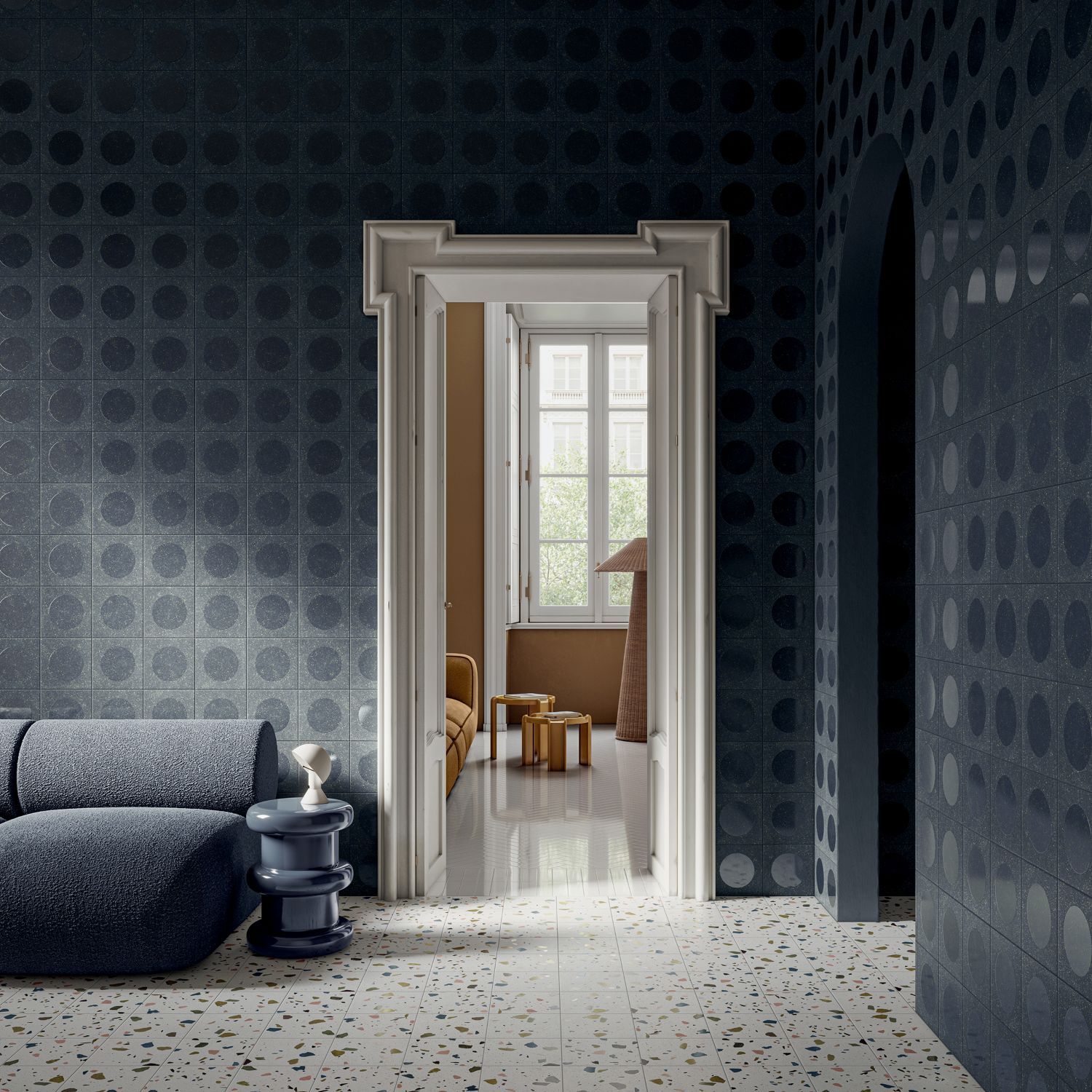
Cir’s Forever Color collection offers 11 shades of creativity for interior design. Forever Color begins with the study of color, its ability to transform any space – all while showcasing how different materials affect the various nuances of any room and setting. (Image courtesy Cir Manifatture)
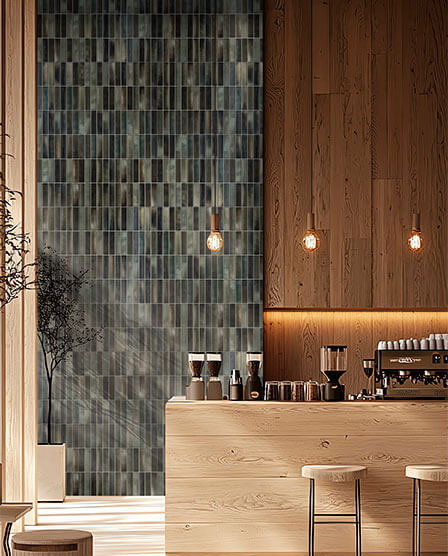
WOW Design’s Terre collection stands out for its range of earthy tones that blend harmoniously, offering a warm and natural palette. These shades pair beautifully with pieces finished in crystalline glaze, creating luminous contrasts. Made in porcelain body and available in 7x28 cm and 11.6x11.6 cm, the series combines matte finishes (Wheat, Sienna, Umber) with glossy glazes (White, Turquoise, Pale Blue, Smoke, Chestnut). (Image courtesy WOW Design)
:From Sottocer is Lumen, a new series of ceramic tile, designed to play with light and color, while offering subtle nuances and unexpected contrasts. From the mysterious depth of Nocturne (pictured here), the Lumen series moves effortlessly between understated elegance and bold character. (Image courtesy Sottocer)
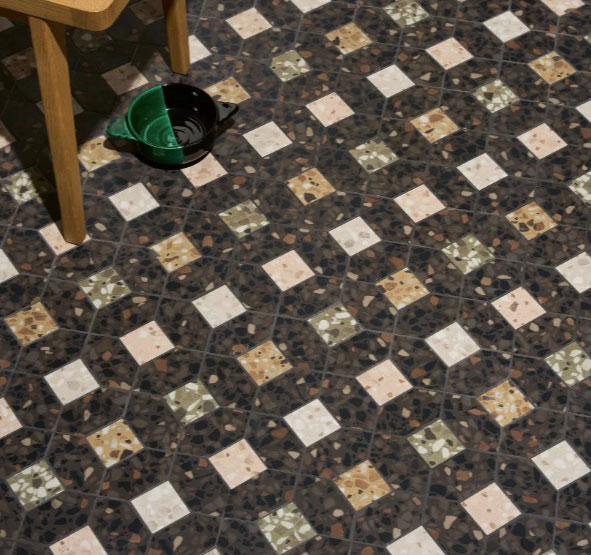
: Chicco from 41Zero42 showcases HD Digital Technology with one of its latest introductions. The 9mm-thick colored body porcelain tile features a natural rectified finish. Featured on the wall is Milano in Bamboo Olive. On the floor is Chicco Verde in a 60x120 (24”x48”) format. (Image courtesy 41Zero42)
Visual Fluidity and Modular Continuity
Newly unveiled collections reflected a growing architectural desire for seamless spatial flow. Tiles are no longer confined to floors or walls—they now traverse facades, furnishings, and landscape elements with unified tonal and textural logic.
Manufacturers are responding with integrated modular systems that allow specifiers to create continuous visual narratives across spaces, reinforcing the principles of adaptive reuse and multifunctional design.
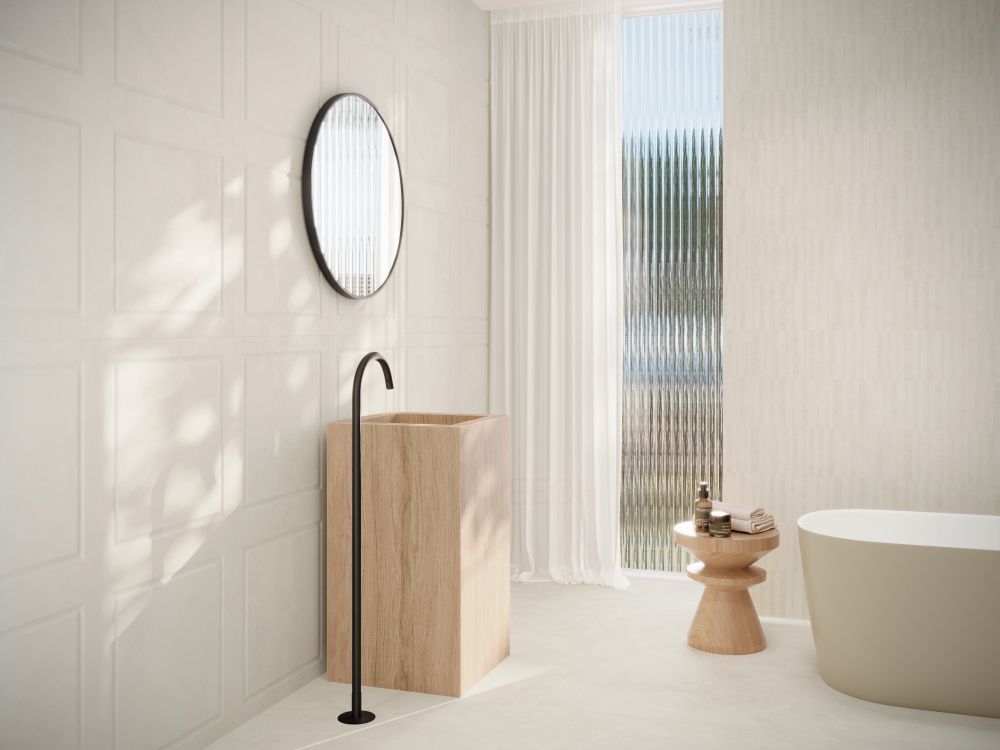
With its geometric reliefs, the Zephyra collection from Ape Grupo is designed to conjure rhythmic depth and serenity thanks to its matte finish, among other subtleties, that evoke a calm environment through continuity. (Image courtesy Ape Grupo)
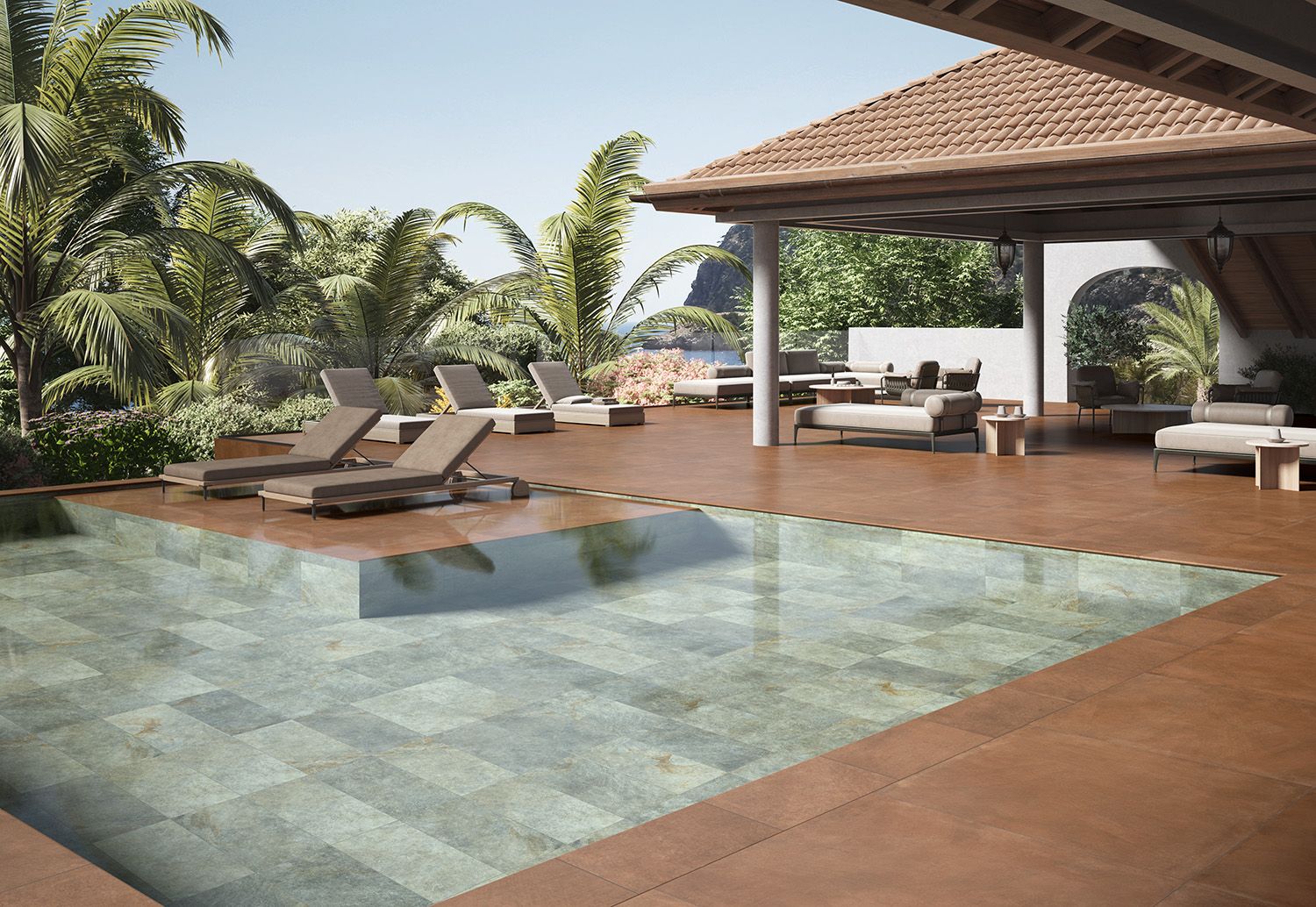
Exagres, a Spanish manufacturer specializing in high-performance extruded ceramic tiles featured an eye-catching original stand designed by Summumstudio. During Cersaie, Exagres showcased two major new products, Drach and Acuarela (shown above). These modern-looking collections highlight the appeal of Mediterranean aesthetics and the power of natural materials. (Image courtesy Exagres)
Modern Minimalism Reimagined
Minimalism continues to evolve from visual austerity to textural intentionality. Collections explored fluted terrazzo, satin-finished concrete, and structured stucco—materials that invite light play and shadow depth.
This new minimalism is quietly expressive, while balancing order with imperfection. It’s a direction resonant with contemporary architecture: refined simplicity that fosters calm in increasingly overstimulated environments.
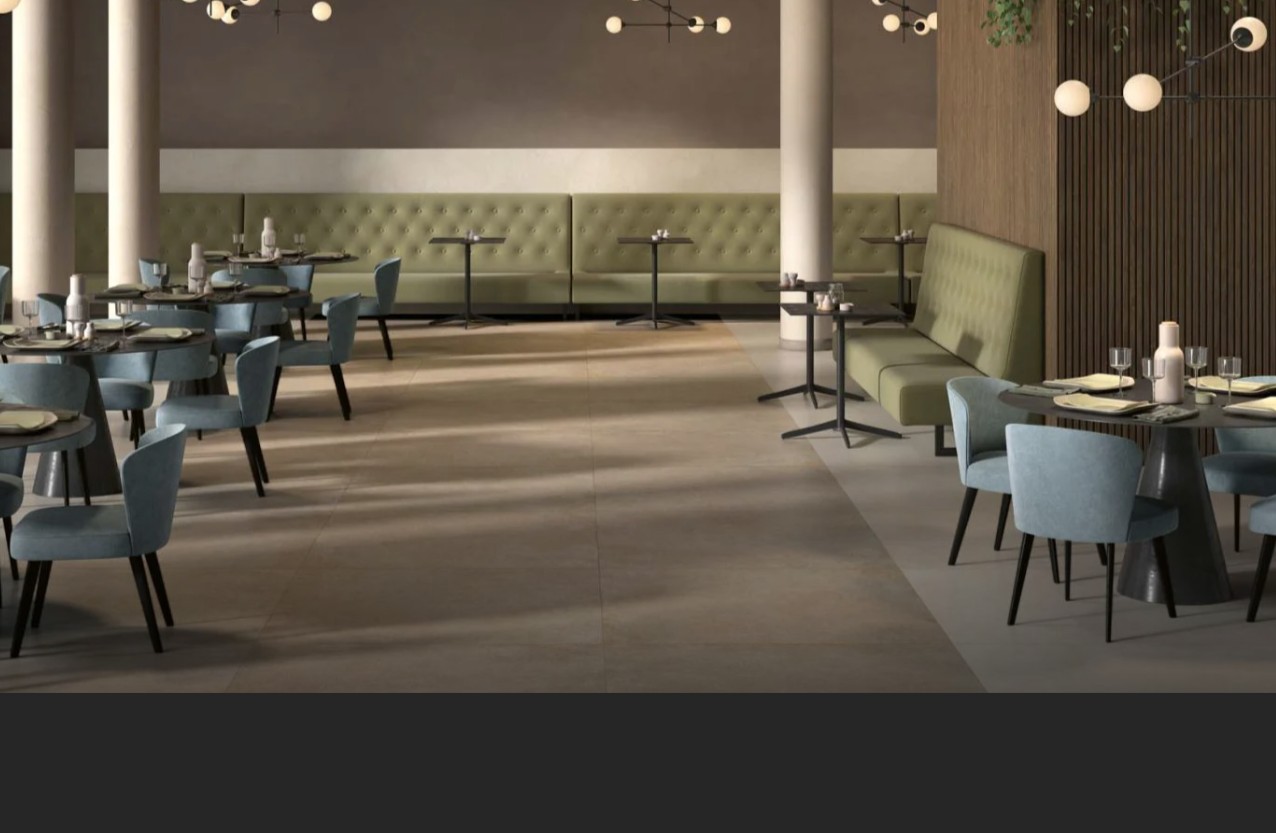
With Energieker, the soul of concrete is transformed into elegant surfaces with details that evoke an urban and contemporary aesthetic. The material texture and balanced tones define strong character spaces, where design and functionality coexist in perfect harmony. A dry and regular concrete effect, without excesses. Corsocomo offers six balanced tones, designed for refined and bright spaces. (Image courtesy Energieker)
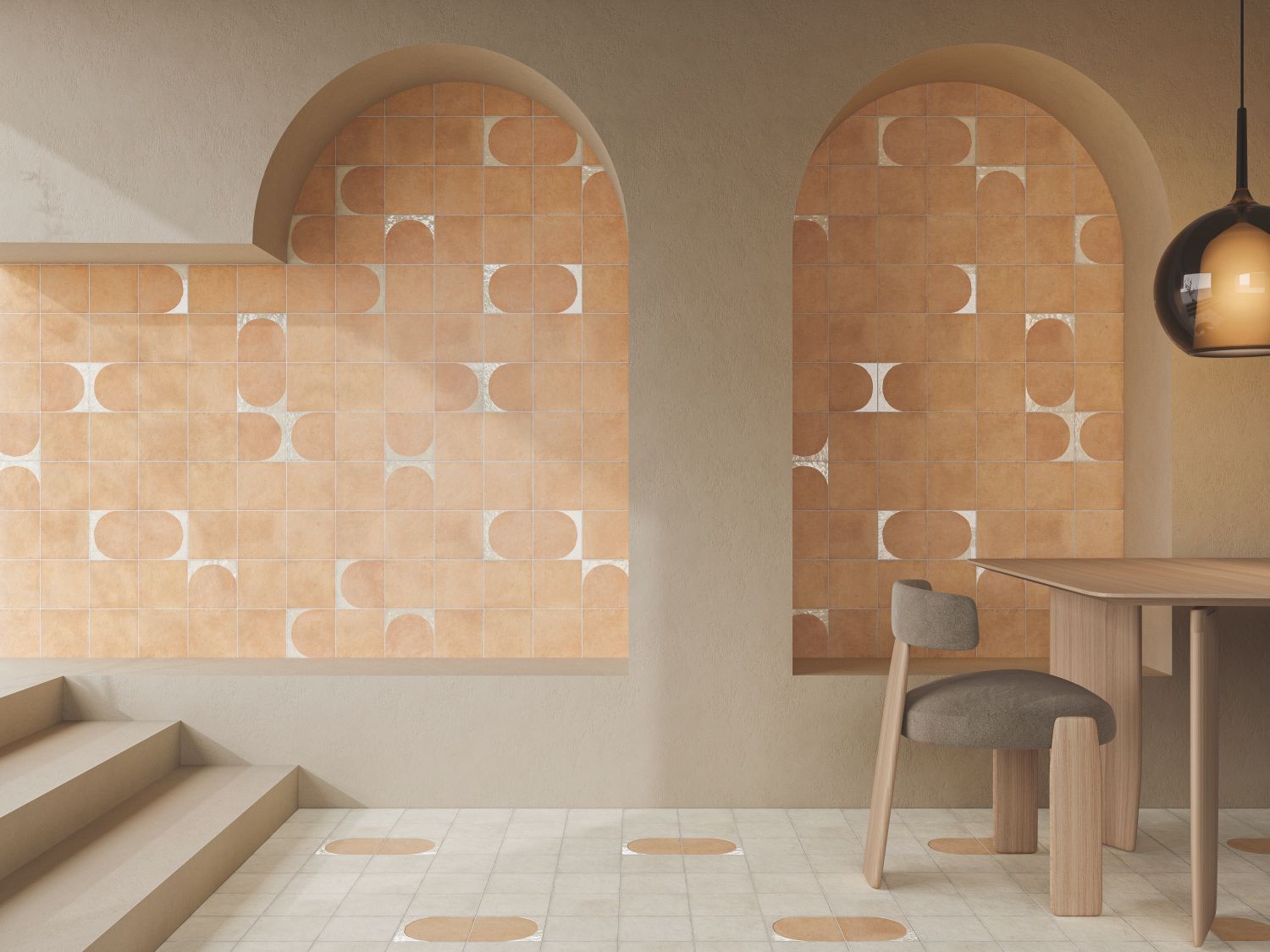
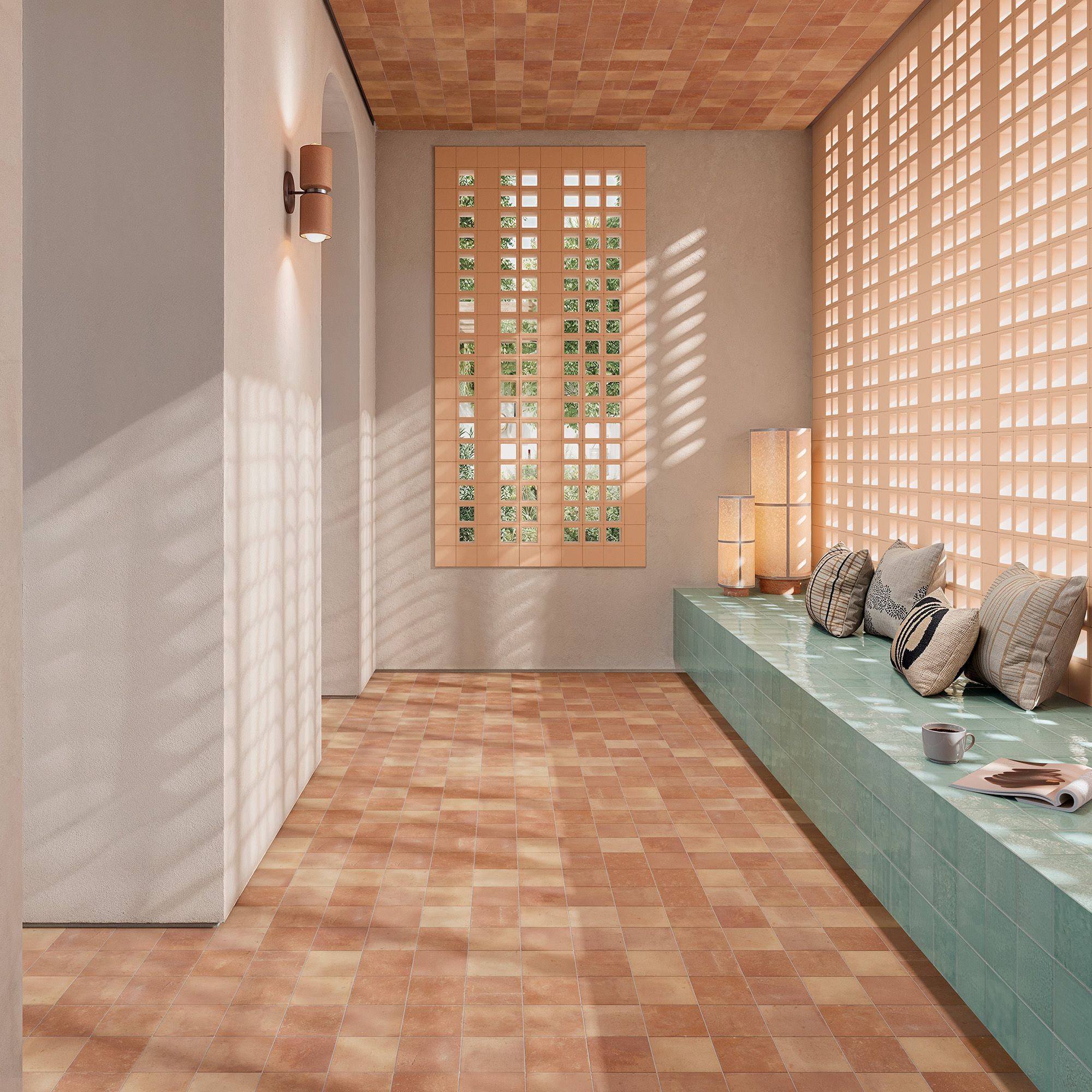
: Decocer’s latest collection, Atlas, embarks on a material journey to the Sahara with its matte porcelain finish. Available in 15x15 and 5x15 cm formats, it combines simple white and terracotta bases with expressive glazed decorations in green, blue, and black, creating spaces full of contrast and timeless elegance. (Image courtesy Decocer)
“Cersaie has confirmed its role as a leading international platform for the ceramic tile and bathroom furnishings sectors. It is capable of attracting exhibitors and visitors from around the globe and strengthening the Bologna Exhibition Centre’s position as a global hub for the manufacturing industry,” said Gianpiero Calzolari, chairman of BolognaFiere.
“The success of this year’s show underscores the vitality of the sector despite the difficult economic and geopolitical climate, as well as its extraordinary ability to generate relationships, ideas, and concrete opportunities for growth. It sends an important signal to the entire sector and reflects the work of Confindustria Ceramica, which makes this event a valuable asset for Bologna and for Italy.”
With hundreds of newly unveiled ceramic and porcelain collections, Cersaie 2025 expertly revealed how tile continues to shape architectural conversations—bridging craft, technology, and sustainability.
Make sure to mark your calendar to attend Cersaie 2026, slated for September 21-25 in Bologna.